How to Govern the Power Platform Default Environment
Diesen Beitrag auf Deutsch lesen
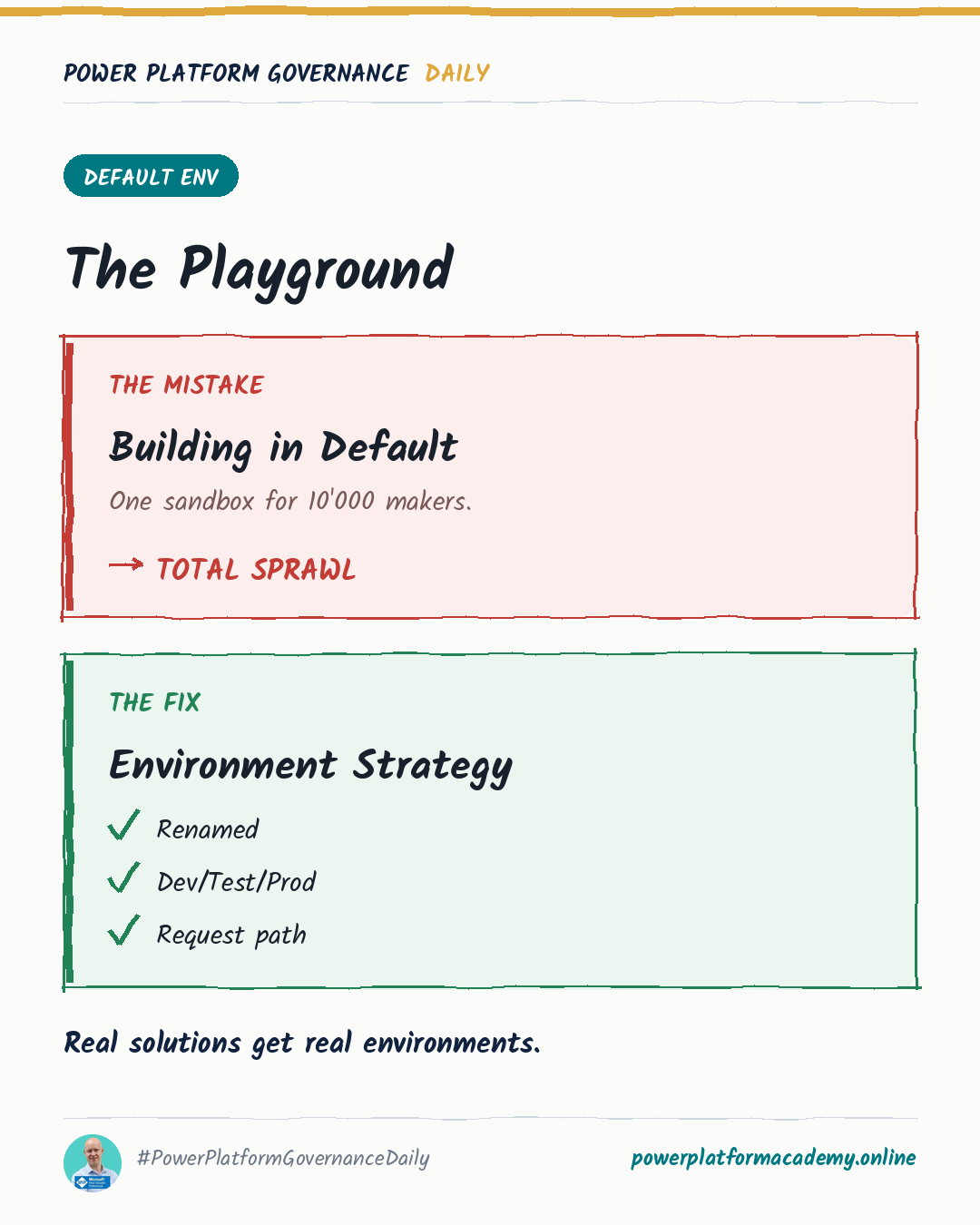
Pick one of three models for the Default Environment - personal productivity only, tolerated but monitored, or locked down - and never blend them.
TL;DR
Pick exactly one model for the Default Environment — personal productivity only, tolerated-but-monitored, or locked down for makers — and never blend them across a tenant. Baseline controls either way: disable sharing with everyone (the sharer rarely knows who “everyone” really includes), turn off trials, viral plans and auto-claim policies that grant premium licences without a decision point, and run scheduled flows that flag blocked connectors or over-shared solutions.
Original by Michael Roth, on michaelroth42.com. Read the original
This is our own summary, not a republication or full translation.
Governance takeaway
- Admins/CoE: audit which of the three models is actually in force today — a tenant running all three depending on who you ask is the real finding, not a question of picking the “best” one.
- Security/Compliance: confirm sharing-with-everyone is off and auto-claim policies aren’t handing out premium licences without a decision point, since both ship as permissive defaults nobody revisits.
- Makers: need a named alternative environment to build in before the Default Environment gets locked down, or you’ll route around the policy the day it lands.